AI Receptionist for Small Businesses: Cover Calls You Would Miss
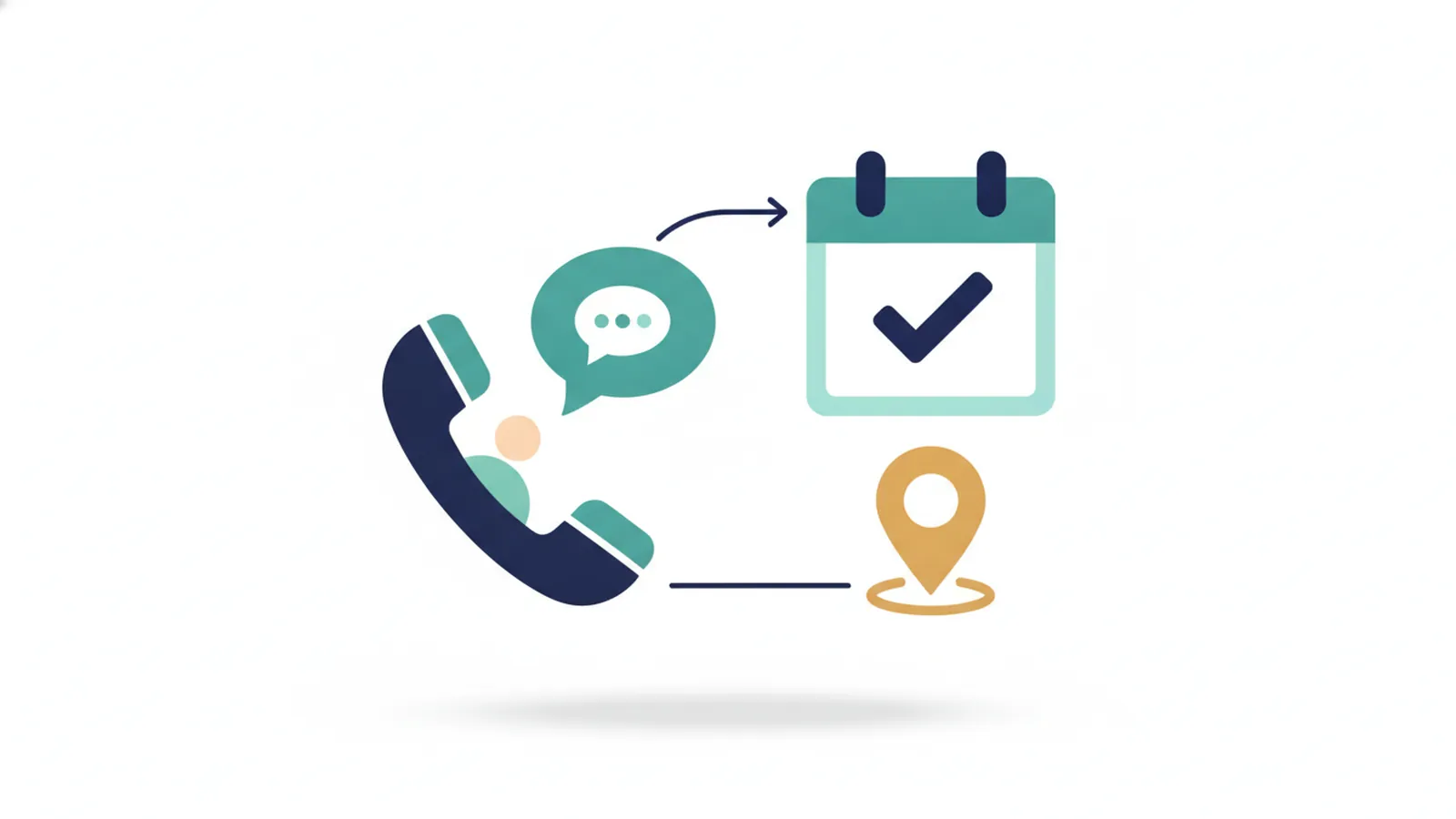
An AI receptionist is a voice assistant that answers your business phone, understands what the caller wants, answers common questions, books appointments and passes urgent or complex calls to you. It suits routine, bookable calls such as trades, salons, clinics and small law intake. It should say it is AI, and it cannot replace a person for emergencies or complicated conversations.
Contents
- What an AI receptionist is
- What it can do
- What it cannot do
- Who it suits
- Why missed calls matter
- What it costs
- AI, text-back or a human service
- Trust, transparency and data
- How we set it up
- How to test it for 90 days
- Frequently asked questions
- Sources
What an AI receptionist is
An AI receptionist is a voice-based assistant that picks up your business phone, holds a conversation and takes action on the call. It is different from a website chatbot, which answers messages on your site or in social media direct messages, and from an old phone menu that asks callers to press numbers.
What it can do
- Answer calls at any hour, and more than one at a time.
- Answer common questions from information you give it, such as opening hours, areas covered and what a job involves.
- Book appointments into your calendar.
- Take messages and qualify enquiries, for example by asking what the problem is and where.
- Route urgent calls to you or a colleague.
- Keep a record of every call.
What it cannot do
It cannot replace a person for emergencies, upset customers, complex quotes or any call where judgement is needed. Read what an AI receptionist cannot do before you decide.
Who it suits
It works best where most calls are routine and bookable, such as trades, salons, clinics, small law firms handling intake, and letting agents. One published three-month test on a single small business reported that an AI answering line picked up 61 calls that would otherwise have gone unanswered and turned 43 of them into booked jobs. That is one case, so treat it as an example and not a promise.
Want a second pair of eyes? Clariti Digital can review your setup and show you what to fix first.
Why missed calls matter
When a caller gets voicemail, many hang up and try the next business. Widely quoted figures say about 62% of calls to small service businesses go unanswered and about 85% of those callers do not call back, but their origin is unclear and they come mainly from vendors. A US consumer survey by CallRail, reported by Quo, found 82% of people would call a competitor and 78% had abandoned a business over an unanswered call. The reliable approach is to use your own numbers: our missed call cost calculator shows what unanswered calls cost you.
What it costs
Vendor price lists start at about $49 to $99 a month for software, against thousands of dollars a month for a full-time human receptionist, according to vendor pages. UK prices and what is included vary, so see what an AI receptionist costs in the UK. Ours: from £99 a month plus a one-off £249 set-up, with any call charges from the phone provider passed on at cost and agreed before you start.
AI, text-back or a human service
There are cheaper and simpler options. Compare them in AI receptionist vs text-back vs answering service, and read how missed-call text-back works in the UK.
Trust, transparency and data
A caller should know they are speaking to an AI. Calls involve personal data, and recording or processing them means you must have a lawful reason, tell callers and keep the data secure. Check the Information Commissioner’s Office guidance and take legal advice for your setup. We set up each AI receptionist so that it says it is an AI at the start of every call, tells callers when a call is recorded, passes urgent calls to a person you name, and uses providers that publish their data protection terms.
How we set it up
- We map your calls, hours and the questions callers ask.
- We write the greeting, the answers and the rules for urgent calls.
- We connect your phone number and calendar, and test it with you.
- We review the call summaries each week for the first month and adjust.
How to test it for 90 days
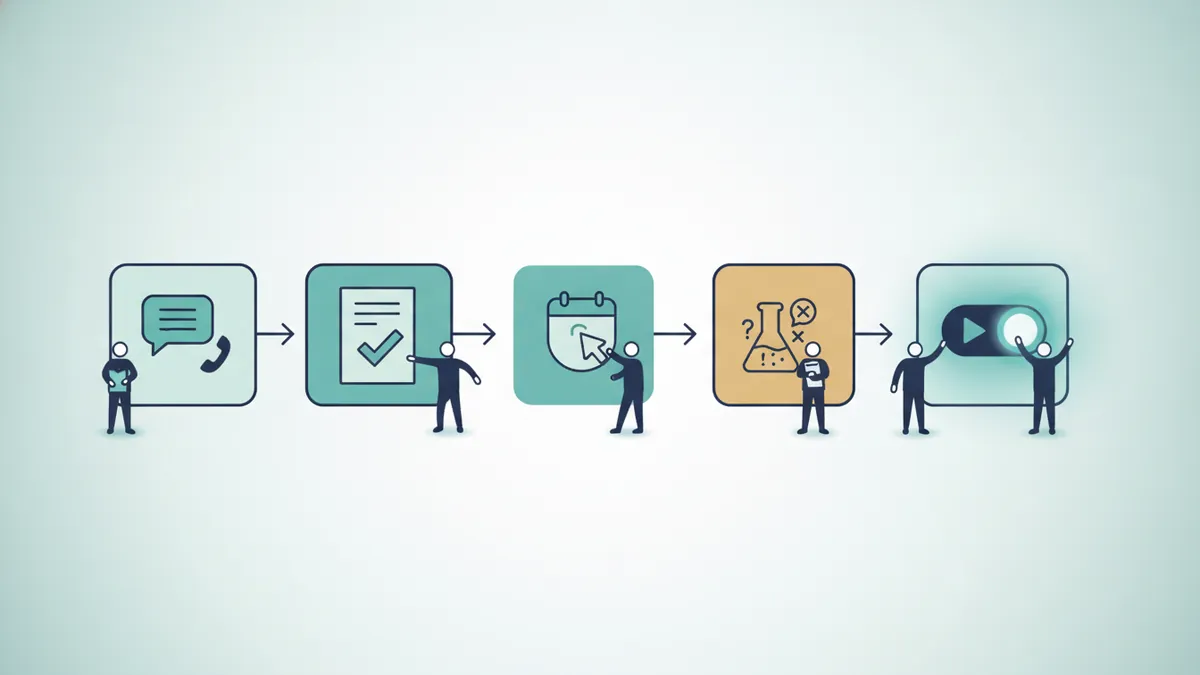
- Count your missed calls before you start, from your phone provider’s logs.
- Run the assistant on after-hours and busy-time calls first.
- Review every call transcript or summary in the first month.
- Track calls answered, bookings made, urgent calls passed on and any complaints.
- Compare enquiries and jobs with your baseline, and decide whether to extend, change or stop.
To see how calls and forms are counted, read our guide to why a website gets visitors but no enquiries.
Frequently asked questions
What is an AI receptionist?
A voice assistant that answers your business phone, answers common questions, books appointments and passes on urgent calls. It is different from a website chatbot.
Does it sound human?
Modern ones sound natural, but a caller should be told it is an AI. Some callers feel misled when it pretends to be human.
Which businesses is it right for?
Businesses whose calls are mostly routine and bookable, such as trades, salons, clinics, small law intake and letting agents.
What happens in an emergency?
The assistant should recognise urgent keywords and pass the call to you. Set the rules in writing and test them. It should not handle emergencies alone.
How much does it cost?
Vendor prices start at about $49 to $99 a month for software, but UK costs and inclusions vary. See what an AI receptionist costs.
Do I need to tell callers it is AI?
Yes, as a matter of honesty and trust, and data protection rules require you to be transparent about how personal data is used. Check ICO guidance and take legal advice.
Sources
- Lilach Bullock, I tested an AI phone receptionist for three months on a real small business, checked 11 October 2026.
- Quo, Small business callback statistics, checked 11 October 2026.
- RingCentral, AI receptionist for small business, checked 11 October 2026.
- Stammer, AI receptionist for small business, checked 11 October 2026.
- Information Commissioner’s Office, Guidance and resources, checked 11 October 2026.

Sam, Editor at Clariti Digital.
Related guides
- Missed call cost calculator: Put a number on what unanswered calls cost your business.
- AI receptionist vs text-back vs answering service: How to choose between AI answering, text-back and a human service.
- Missed-call text-back in the UK: How missed-call text-back works and what to check under UK rules.
Need help with this?
Clariti Digital is a UK digital growth agency for established local businesses. We start with a diagnostic, then fix what holds back visibility, enquiries and trust. Call +44 7435 063827 or email sam@claritidigital.com.
This guide is general information, not legal advice.